The Pulse of the Invisible: A Story of the Energy Transition 💡
The Light Switch Paradox
Every morning, billions of people perform a silent act of faith: they flip a switch. In an instant, a room is flooded with light. For a century, the success of our energy system has been defined by its invisibility. We designed it to be a background service, as reliable as a heartbeat and just as unnoticed.
But in 2025, the heartbeat began to skip.
The latest reports from the IEA and McKinsey highlight a "Grid Bottleneck". We are building wind turbines and solar farms at record speeds, yet they are often left "waiting at the door" because our aging, invisible infrastructure wasn't built for a two-way conversation. We realized that we couldn’t just swap the fuel; we had to change the entire anatomy of the system.

The Human Variable
For a long time, the architects of the transition treated humans like variables in a cold equation. They assumed that if the math worked, the world would follow. But they forgot that people don’t consume "units of energy"—they build lives. They cook family meals, they keep their children warm, and they seek a sense of control over their surroundings.
As someone who looks at the world through the dual lens of Supply Chain Planning and Psychology, I see the flaw in the old math. We cannot solve a lack of trust with a better algorithm. This is where the SHIFT framework comes in. Research now shows that when we move away from treating people as "Rational Economic Actors" and instead respect their habits, feelings, and need for autonomy, energy savings don't just happen—they stick. We aren't just forecasting demand; we are understanding human hope.
The Friction of Growth
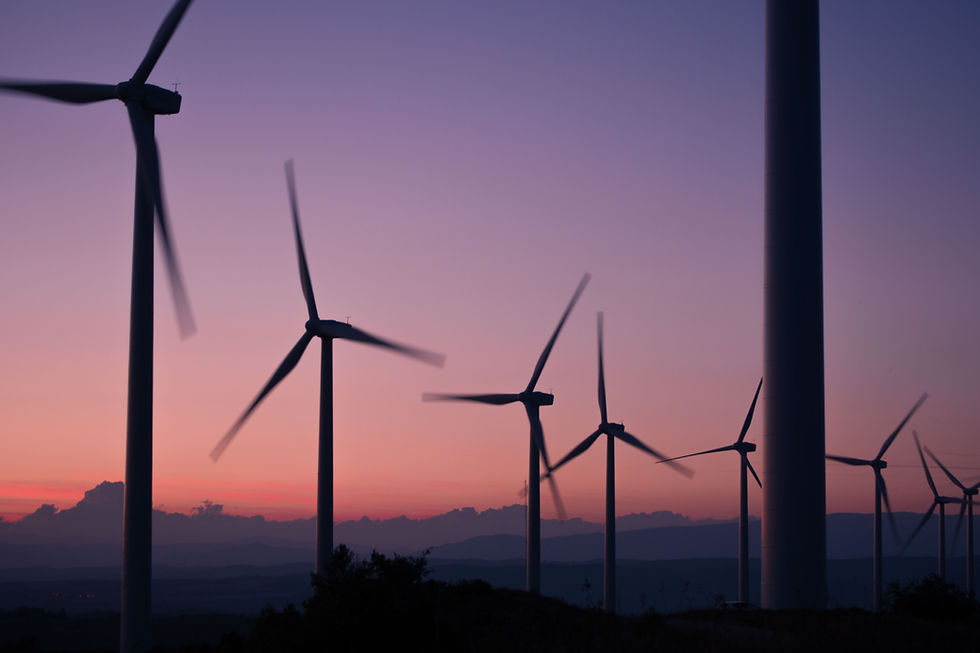
As we began to change, we hit a wall of conflict. Land-use battles broke out; communities pushed back against the "giant fans" in their backyards. For a moment, it felt like the transition was failing.
But research from Utrecht University (2025) suggests a different perspective: conflict is not a sign of failure; it is the pulse of progress. It is the sound of power—literal and political—shifting hands. When we moved from top-down mandates to decentralized, community-owned energy models, the "Dutch Dilemma" of resistance began to dissolve. We learned that when a community owns a share of the sun, they no longer see a "project"—they see a legacy.
The Inheritance
In the center of this storm stood the youth. For years, "Youth Engagement" was a box to be ticked on a corporate social responsibility report. But as we neared 2030, the narrative shifted. Programs like the EU’s Young Energy Ambassadors proved that the generation inheriting this infrastructure shouldn't just be the audience—they must be the lead architects.
They brought a "startup culture" to a legacy industry. They weren't tethered to the "that’s how we’ve always done it" mindset of the fossil-fuel era. They looked at the 3.5 million new energy jobs not just as careers, but as a calling to ensure intergenerational justice.
The New Goal: From Growth to Wellbeing
The most beautiful part of the story happened when we changed the goal of the entire system.
For a hundred years, the goal was "More." More kWh, more sales, more growth. But a groundbreaking 2026 study from IIASA introduced a new North Star: Years of Good Life (YoGL). We stopped asking "How much energy can we sell?" and started asking "How much wellbeing can we support?"
By focusing on resilience and equity rather than just output, the rules of the game changed automatically. We built "passive" homes that required no heating, shared mobility that reduced congestion, and grids that breathed with the rhythm of the community.

A Hopeful Visibility
Today, the energy system is no longer invisible—and that is its greatest strength.
The energy transition is the ultimate supply chain challenge, but it is also the ultimate psychological breakthrough. It is the story of how we stopped being passive consumers and became active citizens of an Energy Democracy.
The transition is here. And for the first time in history, we aren't just flipping a switch; we are lighting the way.
Resources:
1. Global Infrastructure & Supply Chain Realities
IEA (2025). World Energy Outlook 2025. International Energy Agency.
Key Insight: This report identifies the "Grid Lock" as a primary hurdle, noting that grid investment (currently ~$400bn/year) must double to match renewable generation capacity and avoid "energy curtailment"—where clean energy is produced but cannot be delivered.
McKinsey & Company (2025). The Hard Stuff: Navigating the Physical Realities of the Energy Transition. * Key Insight: Analyzes the "Level 3" physical challenges of the transition, specifically focusing on the massive demand for critical minerals (lithium, copper) and the supply chain synchronization required to build out global electrification.
2. Behavioral Science & Psychology
White, K., Habib, R., & Hardisty, D. J. (2019/Updated 2025). How to SHIFT Consumer Behaviors to be More Sustainable: A Comprehensive Framework of Consumer Behavior. (Review and meta-analysis updated in MDPI Energies, August 2025).
Key Insight: The SHIFT framework (Social influence, Habit formation, Individual self, Feelings, and Tangibility) is cited as the gold standard for moving beyond "Economic Man" theories to drive real-world energy saving of 7%–10% at the household level.
IIASA (2026). Rethinking Climate Impacts through Human Wellbeing: The YoGL Metric. International Institute for Applied Systems Analysis.
Key Insight: Published in January 2026, this research introduces Years of Good Life (YoGL) as a superior alternative to GDP for measuring the success of climate policy, proving that decarbonization adds an average of 10.4 "good" years to the life of the average citizen.
3. Youth Engagement & Intergenerational Justice
European Commission (2025). Young Energy Ambassadors Program Guidelines and 2025 Cohort Report. * Key Insight: Formalizes the role of youth (ages 18–35) not as a protest group, but as "Technical Stakeholders" in EU energy policy, linking youth involvement directly to the long-term political resilience of the Green Deal.
UNDP (2024). Future in the Making: Youth for a Just Energy Transition. United Nations Development Programme.
Key Insight: Highlights that the 3.5 million jobs created by the transition require a specific "Innovation Mindset" found primarily in younger generations who are not tethered to legacy fossil-fuel infrastructures.
4. Social Acceptance & Conflict Management
Koelman, M. (2025). Spatial Conflicts of Energy Transition: Dilemmas of Government, Landowners, and Land Use. Utrecht University.
Key Insight: This landmark dissertation argues that "Top-Down" governance is the primary cause of renewable project delays. It advocates for "Integrated Land-Use Management," where communities are treated as partners rather than obstacles.


Comments